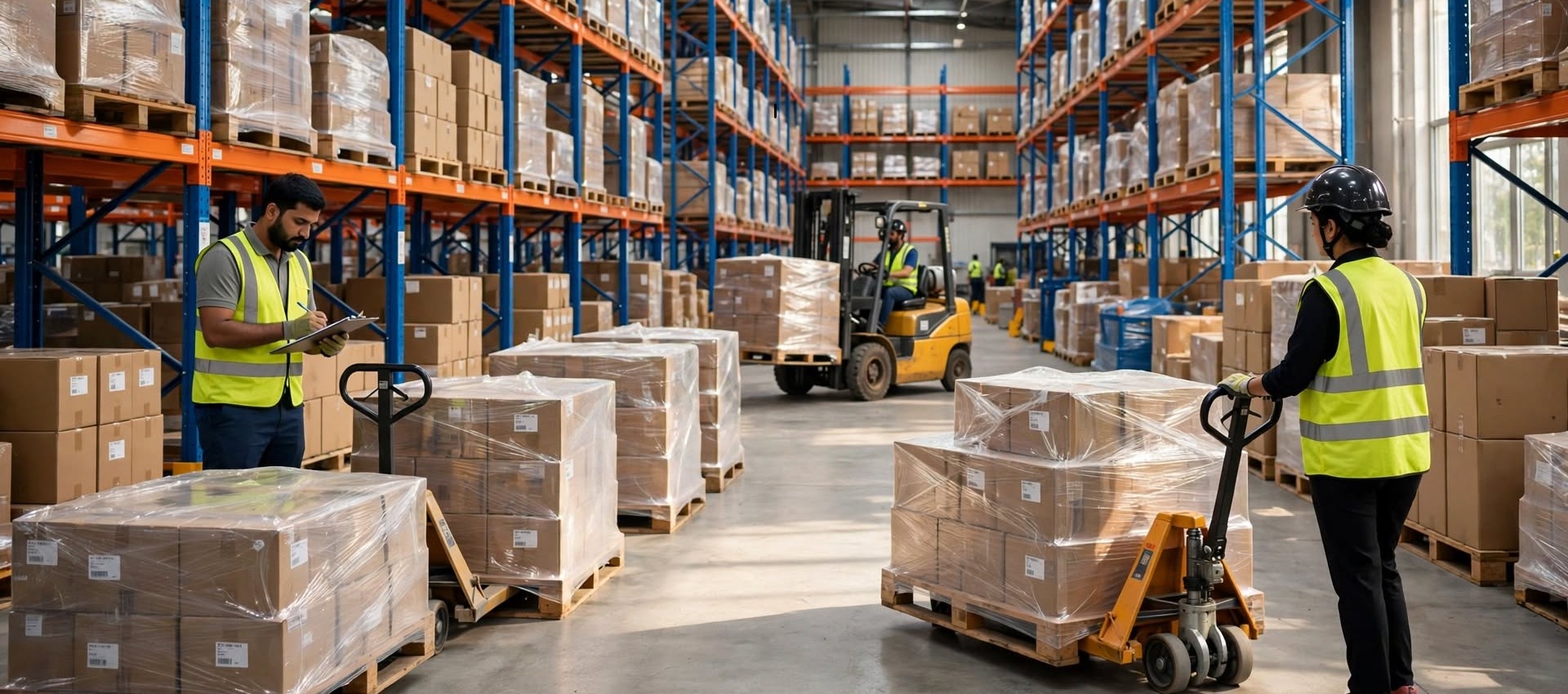
FTL and PTL aren't just two sizes of the same service — they're two different pricing logics. Get the choice wrong and you're either paying for empty truck space you didn't need, or absorbing delays and handling risk you could have avoided. Here's how to actually work out which one wins for a specific shipment.
The Core Difference
Full Truckload (FTL) means your consignment gets a dedicated truck, moving directly from pickup to destination with no other consignor's freight on board. Part Truckload (PTL) means your shipment shares truck space with other consignments heading in a similar direction, usually routed through one or more consolidation points along the way.
That structural difference drives almost everything else: price, transit time, handling risk, and flexibility.
When FTL Is Cheaper — Not Just Faster
The common assumption is that FTL costs more because you're paying for a whole truck. That's only true below a certain shipment size. Once your freight fills roughly 60–70% of a truck's capacity, FTL pricing per unit often works out cheaper than PTL, because PTL rates include a per-shipment handling premium at each consolidation point that FTL avoids entirely.
- Large, single-destination shipments — if you're already filling most of a truck, PTL's shared-cost model stops being cheaper on a per-kilogram basis.
- Time-sensitive bulk freight — no consolidation stops means fewer opportunities for delay.
- Fragile or high-value bulk goods — fewer touchpoints means less handling risk.
When PTL Actually Wins
For smaller shipments, PTL is almost always the right call, and not just on price. You're only paying for the space you use, which makes it the natural fit for regular, smaller-volume dispatch.
- Shipments under half a truckload — you'd otherwise be paying for empty capacity you don't need.
- Regular, smaller-volume dispatch — businesses shipping consistently but not in bulk get better economics from PTL's shared-cost model.
- Non-urgent freight with schedule flexibility — the extra transit time from consolidation stops matters less when there's no tight deadline.
The Trade-Off That Actually Matters
PTL's cost advantage on smaller shipments comes with two real trade-offs: transit time (consolidation stops add days, not hours) and handling touchpoints (more loading/unloading means marginally higher risk of damage). Neither is a dealbreaker for most freight — but for anything genuinely fragile or time-critical, that trade-off is worth pricing out explicitly rather than assuming PTL is automatically the budget option.
The practical approach: get quotes for both when a shipment sits anywhere near that 60–70% capacity threshold. Below it, PTL almost always wins. Above it, run the numbers — FTL frequently surprises people by coming out ahead.